Showing posts with label notable soundtrack. Show all posts

Monday, 13 December 2010

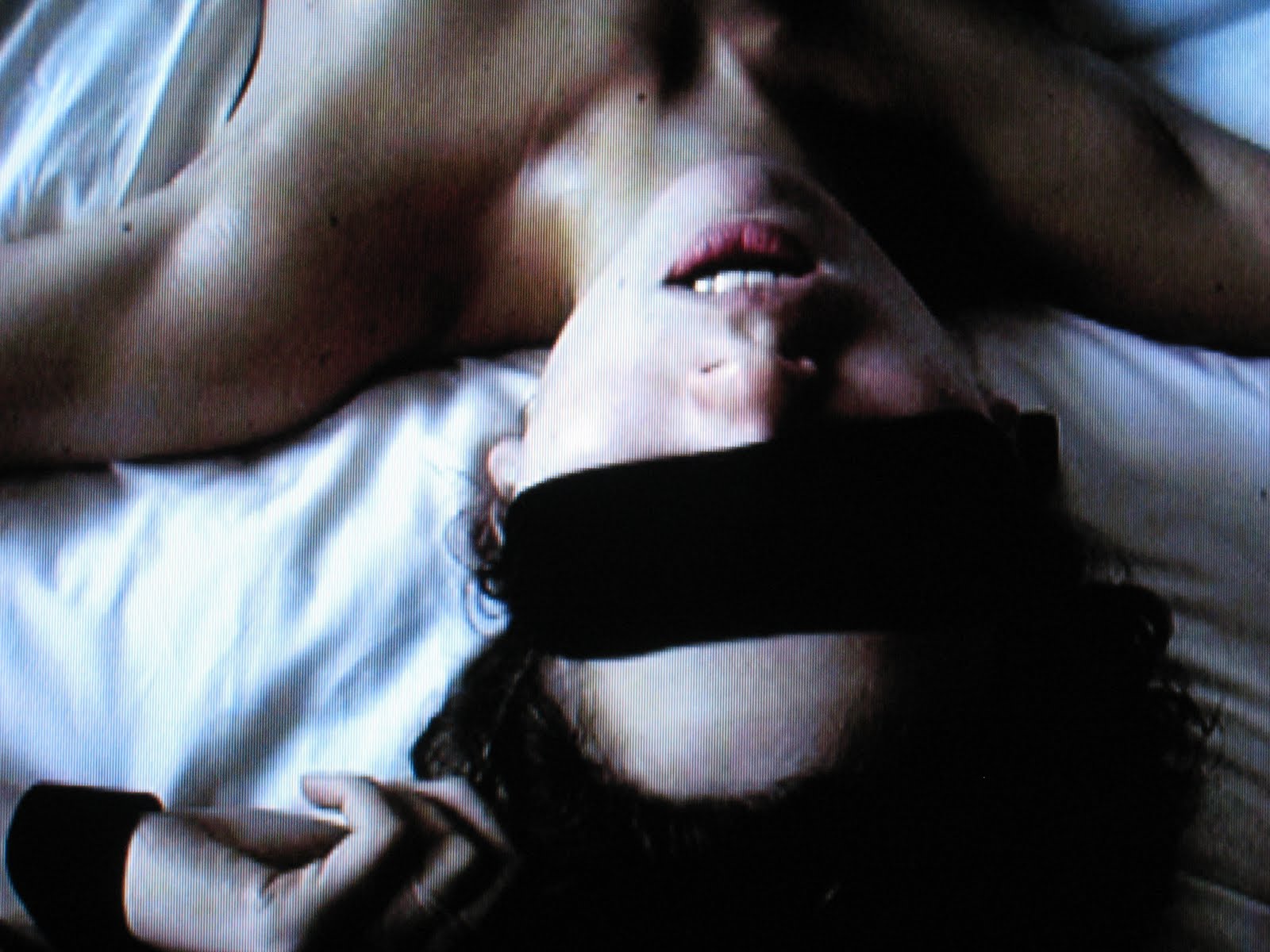
Antichrist: Chaos reigns

CHRISTMAS SPECIAL

DIRECTED BY Lars von Trier, 2009
STARRING Charlotte Gainsbourg, Willem Dafoe
CERTIFICATION 18: Contains strong real sex, bloody violence and self-mutilation
RUN TIME 104 mins, Chelsea Films

COVER QUOTE 'Twisted, depraved and troubling… and also utterly brilliant' - Dave Edwards, The Mirror

WHY YOU SHOULD SEE IT Antichrist was largely ridiculed when it first screened at Cannes: jeers and laughter were followed by boos from the audience, amid isolated applause. Word quickly spread of the film's extremely violent sexual content, which reaches its peak with an extremely graphic image of female self-mutilation. Von Trier explained that he had been clinically depressed at the time of making the film and this was his way of working through those feelings. The Dogme-tic director called Antichrist, 'the most important film of my entire career'. NB It's entirely possible you may not want to read beyond this point, and I wouldn't blame you. Not one bit.

THE PLOT Prologue On a snowy night, in a beautiful, luminous black-and-white that's almost a parody of good taste, von Trier shows Gainsbourg and Dafoe having sex, to the accompaniment of a washing machine, while their baby son, Nic, falls from their apartment window to the snow-covered pavement below.

Chapter 1: Grief Charlotte Gainsbourg's character (I'm going to call them by the actors' first names, let's hope it doesn't get too confusing) collapses at Nic's funeral; the next time we see her is in hospital, one month later. Her husband, Willem (I know, but I'm going to plough on), a therapist, insists on overruling her doctor and takes Charlotte home for treatment. They work through a series of mental exercises together, which includes identifying her biggest fear. This, it seems, is centred on their country cabin, Eden; they travel there to confront her trauma. Willem sees a doe with an apparently dead fawn hanging from her hindquarters.

Chapter 2: Pain (Chaos reigns) Charlotte is suddenly overcome with terror and runs to the cabin, where Willem finds Polaroid pictures of her trip there in the summer with their son. Her antipathy towards Willem is heightened; she describes a scene from her earlier holiday when she could hear a baby crying even though Nic was fine. Willem this time comes across a bloody fox eating itself. It speaks the words: 'Chaos reigns.'

Chapter 3: Despair (Gynocide) Gynocide is the title of the thesis Charlotte was working on when she visited the cabin in the summer; climbing into the attic, Willem discovers her abandoned thesis, among many disturbing images of women being punished. In her notebook, Charlotte's writing deteriorates to an alarming scrawl. In a role-play game, Charlotte identifies with the arguments used against the women in her work.

Charlotte discovers Nic's autopsy report, which Willem has been hiding from her. In it, the coroner notes an earlier deformity of the bones in Nic's feet; in the Polaroids, Willem sees that Charlotte put Nic's shoes on the wrong feet. Charlotte attacks Willem, this time with a hatred and intensity not seen before, knocking him out and then attaching a metal weight to his leg. When Willem wakes he manages to crawl away and hide in a fox hole Charlotte has previously identified. She finds Willem's hiding place, drawn by the cries of a crow with which he is buried, and attacks him with a spade.

Chapter 4: The Three Beggars Charlotte rescues Willem from the foxhole and drags him back to the cabin. 'Do you want to kill me?' he asks. 'Not yet,' is the less-than-reassuring response. She is, she says, awaiting the arrival of the 'three beggars', at which time 'someone must die'. She remembers the opening scene of Nic's death; Charlotte saw him open the window and climb to his death. She cuts off her clitoris with a pair of scissors and then goes into the woods. Willem finds a wrench and manages to remove the weight from his leg; when Charlotte finds him she stabs him with scissors but Willem grabs her and strangles her. He burns her body in front of the cabin, an image filled with hundreds of bodies on the hillside.

Epilogue Willem leaves, watched by the three beggars: crow, deer and fox. Hundreds of faceless figures surround him.

THE FILM Antichrist was my Number One film for 2009. I saw it with a woman friend; you'll have gathered it's not a date movie. Its emotional effect is perhaps diminished with time but Antichrist does repay repeat viewings, and remains shocking.

Von Trier's film has a definite look, from the pristine black-and-white of the prologue through the seeped colours of the funeral scene. Willem Dafoe's early appearances are reminiscent of Tilda Swinton in Tony Gilroy's exemplary corporate drama Michael Clayton (2007) playing a very different role: the character Willem is accused of being aloof, and this is underlined by the blues and greys of his suits and settings. 'You've always been distant,' Charlotte says. 'Okay, can you give me some examples,' he replies. (I think this is supposed to be funny, and it is.)

Willem's arrogance is the initial root of the problem: a therapist, he ignores the dictum never to treat your own family and believes he is smarter than the younger doctor treating Charlotte. 'Trust others to be smarter than you,' she pleads, 'you're not a doctor.' But this is a dick thing, and his penis becomes a target when Charlotte seeks to punish him. When they get home and Willem can begin to work on her, she adds: 'I never interested you until now.' (It is very easy to imagine Charlotte Gainsbourg in the role of trophy wife.)

But there is something darker lurking under the surface, as von Trier shows us in the last shot in Charlotte's hospital room, when his camera zooms in on the murky, green water in a flower vase, rooting among the rotting stems. Antichrist moves into classic horror movie territory: the countryside, but here the enemy is not zombies, or malevolent yokels, but nature, notably women's nature. 'Nature is Satan's church,' according to Charlotte. And, later, 'Women do not control their own bodies, nature does.'

They set off to their woodland cabin, Eden, which is plagued by noisy acorns, which drop noisily on the roof, and ticks, which gorge themselves on Willem's exposed flesh. Willem is demonstrably unprepared for the countryside, equipped only with his smart overcoat and trendy bag as opposed to Charlotte's waterproof slicker and rucksack. 'You were the one who always wanted to go,' he chides, revealing a split in their relationship.

Last summer she went to the cabin with their son, Nic, but Willem did not join them. While there she worked on her aborted thesis, which perhaps provoked a previous breakdown, unnoticed by therapist Willem. An early breakthrough is thwarted when a fledgling chick falls out of tree (almost as in Breillat's Anatomy of Hell), is infested with ants, and then plucked up and eaten by a bird of prey. She attacks Willem for coming to her place: 'You shouldn't have come here, you're just so damn arrogant.'

The film's end credits list a series of researchers in a salutory range of specialisms: misogyny; mythology and evil; anxiety; horror films; music (the haunting theme used at the film's beginning and close is Lascia ch'io pianga, from Georg Friedrich Handel's opera Rinaldo); theology, and therapy (therapeutic consultants and teacher, rather, which is not quite the same thing). The denouement is an orgy of bloody sexuality, excruciating violence and animal cameos that unexpectedly fulfills Charlotte's prophecy: 'When three beggars arrive, someone must die.'

Dafoe the actor emerges in heroic mode - it's impossible not to think of his deserted figure in Platoon (1986), then set to Barber's Adagio for Strings. Framed against the hillside here, he has crafted a crutch from a branch and kneels to pick berries: the very outdoorsman, he has vanquished the wild west of womanhood.

KEY SCENES Chapter 1, 00:27 Charlotte and Willem are having sex in the shower; von Trier shows the snow outside, steam exiting through a vent, and a penis during intercourse. (Dafoe and Gainsbourg had body doubles: porn stars Mandy Starship and Horst Stramka.) All the while, the couple's baby, Nic, climbs out of his cot and pushes a chair underneath a window. Nic climbs up onto the sill; his look of wonder at the falling snow is reflected in Charlotte's absorption in the act of sex, and an air of completeness, satisfaction, at its end.
Chapter 8, 1:05:30 Following her breakdown, Charlotte seems to an aquire a frantic physical need for sex, this culminates in a scene in the cabin where she mounts Willem and tells him to hit her 'so it hurts'. He refuses and she runs out, naked, into the woods: beneath a tree, she masturbates furiously before Willem joins her and they have sex. The roots of the tree are filled with grasping hands - this image, or forms of it, was used on many posters for the film at the time of its cinema release.
Chapter 9, 1:11:57 Charlotte throws herself on top of Willem, then staves in his crotch with a substantial log. When she notices his erection, even though he has passed out, she jerks him off until he ejaculates blood. This is when she goes for a toolbox and, using a hand drill, attaches a round weight through his leg.
Chapter 10, 1:27:20 Charlotte kisses Willem, undresses and lies next to him, pulling his hand between her legs. Following a flashback to the night of Nic's death, the moment when she cuts off her clitoris is shown in detail.

FURTHER VIEWING Where to begin with von Trier? There's Dancer in the Dark (2000), which seemed to drive pop star Björk almost to breakdown (von Trier claimed she tried to eat her dress on set); The Idiots (1998), probably the single film that allowed him to put such strong images as those in Antichrist on the screen; or incredibly spooky TV series The Kingdom (1994), set in a hospital peopled with a gallery of eccentric and unforgettable characters. Then there's Beneath the Waves (1996), which features an incredible central performance from Emily Watson, and is one of the most shockingly blasphemous pieces of cinema you'll ever see. Wonderful.

KEY QUOTE 'Never screw your therapist' - Willem Dafoe's character

Merry Christmas and have a very happy 2011!

Monday, 6 December 2010

The Unbearable Lightness of Being: Czech mates

DIRECTED BY Philip Kaufman, 1988
STARRING Daniel Day-Lewis (Tomas), Juliette Binoche (Tereza), Lena Olin (Sabina)
CERTIFICATION 18: Contains strong sex
RUN TIME 165 mins, Warner Bros

COVER QUOTE 'The most erotic serious film since Last Tango in Paris' - Roger Ebert, Chicago Sun Times

WHY YOU SHOULD SEE IT With Christmas drawing close I thought I'd indulge myself with a couple of not exactly festive films, but snowy ones (see also next week). This adaptation from the book by Milan Kundera is not explicit, but it is sexy. The sex scenes now seem coy, when the same wording is used by the BBFC for such a film as Ang Lee's Lust, Caution (2007), which was rumoured on release to feature unsimulated intercourse.

THE PLOT Prague, 1968: Tomas, a young doctor, flirts with a nurse, telling her to take off her clothes; he visits Sabina - who is described as 'the woman who understood him best', and who complains he never stays till morning, nor does he ever allow a woman to spend the night at his ('Are you afraid of women, doctor?'). Tomas travels to a spa where he meets and flirts with the apparently innocent Tereza. She comes to visit him in Prague, unannounced, and ends up staying.

Tomas introduces the two main women in his life in the hope Sabina can help Tereza, who is starting out as a photographer. Tereza and Tomas marry, with Tomas' farmer patient Pavel and his pet pig Mephisto as witnesses, but Tomas continues to have affairs - on the night Tereza confronts him, the Russians invade: she runs out to take photographs, which she hands over to Dutch journalists. Sabina flees to Geneva, where she begins an affair with a married university professor, Frans. When Tomas and Teresa also go to Switzerland, the latter struggles to find work and returns, unannounced, to Czechoslovakia. Tomas follows.

Hounded from his work as a surgeon because of anti-Communist article he wrote before the invasion, Tomas becomes a window cleaner, with the particular perks that affords a man of his nature. Tereza decides to embark on an affair with a customer in the bar where she works (played by Stellan Skarsgard, Mamma Mia!) but it appears this may have been a trap. Sick of the suspicion lurking in Prague, Tereza insists they move again; they join Pavel on his farm.

The scene shifts to the United States, where Sabina has set up as an artist. She receives a letter saying Tomas and Tereza have died in a car accident. After a night out dancing, Tomas and Tereza drive back to the farm; he says, perhaps for the first time, that he is happy.

THE FILM When I was at university, Milan Kundera's book of The Unbearable Lightness of Being was pretty much prescribed reading for every poseur on campus. I loved it. Kundera has fallen out of fashion, as has this form of tasteful, epic cinema, to which director Kaufman added a healthy smattering of sex. It's a strange film as it seems to be linked by its almost non-stop score, from the opening spa scenes, through the comic themes of Tomas' seductions, the darkness of the Soviet invasion to bucolic countryside themes at the close.

Much of the sex in the film The Unbearable Lightness of Being is played for comedy: Tomas orders a nurse to strip for him in his hopital, with fellow surgeons and a patient looking on from an adjoining room; Tereza leaps onto Tomas after a spurious check up ('Don't worry, I'm a doctor'); on another occasion, the camera pans to their dog, Karenin, looking mournful. The only time the sexual anticipation is serious is when Tereza takes nude pictures of Sabina: Tereza's eyes fill with tears at the exposure of her husband's lover before Sabina continues the seduction. The looks on Tereza's face as Sabina begins her friend's exposure preempts Maggie Gyllenhaal's similar predicament in Secretary.

Kaufman (writer/director of The Right Stuff and writer on the Indiana Jones movies) makes the most of his two women stars: Olin shows off her legs from the start, stretching her acting muscles when she moves to Geneva. Binoche rises above her silly accent to produce a startling performance: I've never warmed to her onscreen, nor is she conventionally sexy, but her defenceless portrayal rises above the innocent gamine Tereza could easily be.

The director, however, is better on the historic than the personal: his film was fêted on its release for the method (much like Woody Allen's Zelig) he inserted his characters into contemporary, often black-and-white, footage of the Prague invasion, even to the appropriation of famous images. Those scenes have lost nothing of their power more than 20 years on from the film, and 40 after the events which inspired them. The scenes of the couple's flight are particularly poignant, reenacted as they were following the fall of the Iron Curtain.

KEY SCENES Disc One, Chapter 5, 17:27 In the iconic image that is used on the DVD cover, Sabina poses in bowler hat and underwear over a mirror that has been placed on the floor by Tomas. In the following scene, Tereza visits Tomas at his flat for the first time. She sneezes and he pretends to give her a physical examination before she jumps him.
Chapter 8, 27:03 Sabina and Tomas are having sex, with her on top, when she spots him checking his watch in the mirror. She hides one of his socks in revenge.
Chapter 13, 50:47 Tereza is swimming in the public baths when she has a hallucination: the group of women exercising in front of her are suddenly naked. Among them she spots Tomas, who seems to be offering her own nude figure up. That night she tells Tomas she wants to see the women with whom he has affairs: 'Take me to them, I'll undress them for you.'
Chapter 22, 1:24:44 Tereza asks Sabina to model nude for her; they drink and Tereza takes pictures, before Sabina turns the tables on Tereza. Their assignation is interrupted by the arrival of Franz, who declares he has left his wife. Sabina asks him to come back the next day; when he returns, her studio is completely bare.
Disc Two, Chapter 31, 16:14 On his window cleaning rounds, Tomas is seduced by the wife of a high-ranking party member. At home that night, Tereza smells the woman's sex in Tomas' hair. Tereza cannot understand how he can make love to women without being in love. 'I wish I could be like you,' she says. 'Insensitive.'
Chapter 33, 22:27 Tereza decides to visit an engineer she meets in the bar where she works but she believes she is being spied upon and is initially unresponsive: she allows herself to be undressed and forces herself to go through with it.

FURTHER VIEWING Kaufman's film is steeped in the history of Czech cinema, feeling particularly close to Milos Forman's bawdy The Firemen's Ball (1967). (In the 1970s and '80s, of course, Forman was working in Hollywood on such movies as One Flew Over the Cuckoo's Nest and Amadeus.) There's another Czech director whose work I'd like to highlight here, however, partly because he's made a few films based on the work of another great Czech writer, Bohumil Hrabal, including, most recently, I Served the King of England (2006).

Jirí Menzel's masterwork is probably Larks on a String (1969), but it's to another Hrabal adaptation I turn here: Closely Observed Trains (1966). Set in a rural railway station it manages to combine a young man's crisis over the loss of his virginity, resistance efforts to delay the Nazi invasion and the station manager's predilection for stamping the naked bottoms of young women with his official seal. Unforgettable.

KEY QUOTE 'Take off your clothes' - Tomas, repeatedly

Monday, 29 November 2010

The Wayward Cloud: Melon obsession

DIRECTED BY Tsai Ming-Liang, 2005
STARRING Lee Kang-Sheng (Hsiao-Kang), Chen Shiang-Chyi (Shiang-Chyi), Sumomo Yozakura (Japanese porn actress)
CERTIFICATION 18: Contains pornography theme, strong sex and one scene of sexual assault
RUN TIME 114 mins, Axiom Films
LANGUAGE Mandarin

COVER QUOTE 'High comedy, high-camp musical numbers and a vast amount of hardcore porn' - Peter Bradshaw, The Guardian

WHY YOU SHOULD SEE IT The Wayward Cloud was released in the UK simultaneously with Tsai's I Don't Want to Sleep Alone (2006). The latter is the better film, but The Wayward Cloud is brighter, camper - and probably the most unusual sex film you'll see.

Born in Malaysia, of Chinese background, Tsai moved to Taipei aged 20 to continue his studies. After a visit home, he intended to make a film about foreign labour but this transformed into a story about porn stars. To Tsai they lead a double life and find it hard to be accepted.
THE PLOT Taiwan is in the grip of drought: the foremost method of hydration is either bottled water or comes from watermelons, which are experiencing a boom. Chen and Lee, from Tsai's earlier What Time Is It Over There (2001), meet in a park; a watchseller in that movie, he now acts in porn films. He helps her find a key and they both try to open a mysterious locked suitcase and hang out together, smoking or cooking. (In one scene in the kitchen, they reenact the lobster escape from Annie Hall, this time with crabs.)

He washes in the water tank on the roof of the building, she fantasises over a giant watermelon she keeps in the fridge. She inserts it up her top and walks around with it as if pregnant, simulating giving birth on the building's stairs. A film crew is making a porn movie in the same building; when Chen finds the lead actress passed out in the lift she takes her back to her flat but the shoot continues, using the unconscious woman. Throughout there are many musical numbers.

THE FILM The Wayward Cloud opens in a generic, grey underpass but much of the film, interspersed by kitsch musical numbers, couldn't be more colourful. Even the watermelons, which lie at the heart of director Tsai's fantasy, glow green and bleed bright red.

The musical numbers involve a glittery reptilian creature basking at night-time in the building's rooftop watertank (the Nat King Cole-like The Half-Moon), a torch song number (sung by actress Lu Yi-Ching) and another featuring conical bra-ed women bearing plungers in a bathroom full of urinals and a man dressed as a penis - literally a knobhead (Be Patient!). In another, a bevy of women fondle a smiling statue of Chiang Kai-Shek, while the Laughing Policeman-inspired song highlight features a cross-dressing date gone wrong and a troupe of dancers bearing umbrellas emblazoned with a watermelon motif (What a Date!).

With its 1970s soundtrack, Deep Throat could be a porn musical, and director Gerry Damiano was keen to see a big-budget cinema that embraced hardcore sex. Albeit as a Taiwanese art-house movie, The Wayward Cloud is somewhere close to meeting his dreams, with its over-the-top musical numbers.

While the songs in Tsai's movie are surprising populous - on a par with Les Demoiselles de Rochefort at times - the non-musical scenes tend to feature one person on his or her own, and even when there are more people present - the couple of Lee and Chen, or the porn film crew - very little is said, if anything. The songs feature essentially the only dialogue in the movie.

By contrast, the amateur porn shoot in Lucas Moodysson's A Hole in My Heart is a far more chatty, argumentative affair. The subjects in both films are equally isolated from the outside world: Moodysson's characters bound to their flat, those in Tsai's film getting no further than their building's stairs or lift, which seems to go nowhere. Both directors are concerned with their characters as outsiders: an extreme of embodiment of the urban alienation which is a favourite theme of their films.

Despite its extreme scenarios and premise, there is no full-frontal nudity in The Wayward Cloud. There is, however, the rape of the porn actress while she is unconscious so that the film's shoot can continue unhindered. It could be funny if it weren't unconscionable. Chen has previously recognised her from a porn DVD she watches wide-eyed; she comes to realise her partner Lee's new profession.

At the begininning of the film, Chen is presented as somewhat unhinged, hanging around road works insisting she has lost her key amid the builders' heavy machinery. She does find her key, however, and Lee helps her dig it up from the freshly laid tarmac. Water wells up in the hole he has created but, even in these drought-afflicted times, it is ignored.

KEY SCENES Chapter 1, 2:12 A woman in a nurse's uniform lies splayed on a bed. Between her legs is half a very large watermelon. A man in a white coat first licks and then puts his finger in the watermelon, moving it in and out firmly. He inserts more fingers and moves them more vigorously. The woman acts as if he is jacking her off; he feeds her big pieces of the fruit and licks the juice off her naked body. They have sex with him wearing the carved-out watermelon shell like a helmet.
Chapter 5, 45:52 The porn crew are filming a scene in a bathroom. The porn star is bent over the woman, fucking her from behind, as a crew member improvises the effect of a shower using water bottles. In disgust, he finally runs out of water. They continue with some very murky-looking green water.
Chapter 7, 1:02:00; 1:05:24 The man masturbates in a doorway watching the Japanese female star playing with herself on a kitchen counter. She uses a small water bottle but stops when the top comes off; a crew member is ordered to help.
Chapter 10, 1:34:00 In the final scene, the male porn star is filmed having sex with his unconscious female counterpart. The crew variously hold up or manipulate her body as required. Chen watches them and becomes vocally aroused; at the crucial moment, the porn actor leaps up and comes in her mouth.

FURTHER VIEWING Lee Kang-Sheng stars in all of Tsai's films from their debut Rebel of the Neon God (1992), usually lending his name to his characters. They met in a video games arcade.

KEY QUOTE 'The [bottle] cap's inside the Japanese girl. Go see' - porn film director

BONUS CURIO For the film, Tsai made star Lee die his pubic hair 'a golden colour, like a lion's mane.'

Monday, 22 November 2010

Emmanuelle: Arsan about

DIRECTED BY Just Jaeckin, 1974
STARRING Sylvia Kristel (Emmanuelle), Daniel Sarky (Jean), Christine Boisson (Marie-Ange), Marika Green (Bee), Alain Cuny (Mario)
CERTIFICATION 18: Contains strong sex and nudity
RUN TIME 90 mins approx, Optimum

COVERLINE 'Full uncut version: never before seen in the UK' (in capital letters, naturally)

WHY YOU SHOULD SEE IT The debut of a long-running film franchise, Emmanuelle is based on a purportedly autobiographical work from the 1950s published under the name Emmanuelle Arsan, real name Marayat Rollet-Andriane. (It's been said that the series of books written by her were penned by her diplomat husband, however.) The film became a more acceptable version of Deep Throat for cinema audiences around the world, running for more than 10 years at one cinema in Paris until it closed in February 1985.

Over the decades since its release, many of the cuts originally demanded by the BBFC have been reinstated. The most contentious issue is the film's gratuitous depiction of sexual violence - notably, Emmanuelle's reaction to it - but, in 2007, the full film was finally released, uncut.

THE PLOT Emmanuelle travels to Thailand to join her diplomat husband, Jean. Prior to her arrival, Jean has boasted to his colleagues of their tremendous, open, sexual relationship (and, indeed, shown them naked pictures of her). Though Emmanuelle was faithful to him at home in Paris, she sleeps with two men on the flight to Bangkok.

Arrived in Thailand, Emmanuelle has to cope with the boredom of the expat-wife lifestyle as well as the advances of at least one predatory lesbian, Ariane. Emmanuelle is drawn into the plans of gamine Marie-Ange and falls for archaeologist Bee. When she accompanies the latter on a trip, Jean is overtaken with jealousy and visits first a strip club, where he gets into a fight, and then Ariane, with whom he has violent sex.

Bee tells Emmanuelle she doesn't love her after they've had sex and Emmanuelle returns home, heartbroken. Jean, Marie-Ange and Ariane all encourage her to accept the advances of their ageing friend Mario. He takes her to an opium den, where she is raped, and then offers her as prize to the winner of a Thai boxing match.

THE FILM Emmanuelle gives me a headache. It's not just the migraine-inducing soundtrack (by Pierre Bachelet) but also the grotesque cod philosophising. Add to that dubious sexual politics and it's surprising this film has such a reputation that it is continously revisited, either in new versions or rereleases.

There is, too, the film's take on its Thai setting as the 'exotic East', reinforced by Emmanuelle's first experience of the sights and clamour of a Bangkok market. The film's view of the locals is little better: when Emmanuelle and Jean go to bed to have sex, they're watched by their houseboy and a maid. The houseboy then chases the maid into the garden and what begins playfully appears to end in rape; this is a theme revisited at the film's end.

In the meantime, there's an aspect of the movie that's less commented on, but equally troubling. Along with Bee, Emmanuelle quickly falls under the spell of the much younger Marie-Ange, whose no-nonsense sexual manner she admires; Emmanuelle wants to achieve Marie-Ange's innocence.

The latter is portrayed in a very childlike manner: she's usually seen sucking on a lolly ('It makes the old guys hot for you,' she explains) and has no qualms about stripping off, even masturbating (to a magazine photograph of Paul Newman), in front of others. She says she has played with herself since she was 12, but it's never clarified how old she is; she admits to fancying Jean and, later, he says they have been spending the night together.

At the film's start, we are almost immediately given a glimpse of Sylvia Kristel's pubic hair, as she lounges in her Paris home. The big muffs of the seventies must be a great boon to filmmakers as they surely cover any number of potential arguments with censors. The only pricks on show here, however, are the men themselves.

Most of Emmanuelle's sex scenes are fairly desultory affairs: the lesbian liaisons tend to revolve around squash games, clinches in the locker room or, oddly, against a ladder propped up in the corner of the court, which would surely be a hazard to any player. Thai performers are depicted in much more explicit scenarios, not least when one is shown smoking using her vagina.

Pleasure, freedom, hypocrisy and eroticism are the film's buzz words but the dialogue becomes unpalatable with the arrival of lothario Mario. He professes that 'love between couples should be outlawed. Every act of love must include a third person.' This pseudo philosophy leads to the rape of Emmanuelle in an opium den, followed by her subjugation in front of a room full of spectators. (Ariane also tells Emmanuelle that Jean 'practically raped' her.)

Neither scene is as graphic as we've come to expect nowadays but it was only a few years ago that the BBFC allowed the film to pass uncut, because of the board's standards on the eroticisation of sexual violence, particularly when a victim is depicted enjoying a non-consensual act. Don't let the seventies fluff that fills most of this film fool you - there's a darker message here that, exceptionally, seems to have been allowed through.

KEY SCENES Chapter 3, 16:28 Emmanuelle goes for a swim, naked, with the camera following her underwater. She is joined by Marie-Ange.
Chapter 4, 25:27 Emmanuelle is shown having sex with two men, separately, on her flight to Bangkok: first in her seat then, with the other man, in the plane's surprisingly roomy bathroom.
Chapter 7, 52:11 A performer at a sex club visited by Jean smokes a cigarette with her vagina; a couple then participate in a lesbian floor show.
Chapter 8, 55:36 Bee and Emmanuelle make love; the former manages to climax with the latter apparently biting her knee.
Chapter 10, 1:18:28 Emmanuelle is raped at the opium den she attends with Mario.
Chapter 11, 1:24:11 Emmanuelle is taken from behind by the victor of a Thai boxing bout at Mario's behest, in front of a room full of spectators.

FURTHER VIEWING There are any number of further Emmanuelle adventures, many boasting different spellings of our heroine's name (IMDb lists some 70 entries). By the time of Emmanuelle IV (1984), Kristel undergoes plastic surgery and is replaced (by Mia Nygren), although she did revisit the role in the early 1990s. The series had long before reached its nadir with Carry on Emmanuelle (1978), an unhappy mingling with the camp British comedy franchise.

Fans of 1970s softcore may want to investigate the work of photographer David Hamilton. His silly, Vaseline-lensed romps feature more naked young women, including - in Premiers Désirs (1984) - Emmanuelle Béart, as well as the obligatory, irritating soundtrack. His best-known work, Bilitis (1977), is a barely palatable coming-of-age tale.

KEY QUOTE 'I didn't marry Emmanuelle to keep her to myself... I'm not jealous' - Jean

Monday, 25 October 2010

Shortbus: Searching for the Big O in NYC

DIRECTED BY John Cameron Mitchell, 2006
STARRING Sook-Yin Lee (Sofia), Paul Dawson (James), Lindsay Beamish (Severin), PJ DeBoy (Jamie), Raphael Barker (Rob), Peter Stickles (Caleb), Jay Brannan (Ceth), Justin Bond
CERTIFICATION 18: Contains strong real sex
RUN TIME 90 mins approx, Universal

COVERLINE 'Open your mind. And everything else'

WHY YOU SHOULD WATCH IT As GQ proclaims on the DVD cover, 'The most sexually explicit film to go on general release.' And, if you've ever wondered about those Michael Flatley rumours, this is your chance to see the act of auto-fellation.

THE PLOT A variety of characters living in New York are connected by sex club Shortbus; as the city suffers a series of electrical 'brown outs' they're looking for more sex, happier relationships, or both. Sofia meets couple Jamie and James through her work as a therapist and they introduce her to Shortbus; there she meets dominatrix Severin and the pair agree to talk through their various problems.

After five years together, Jamie and James decide to open up their relationship and they meet Ceth at the club; neighbour Caleb is obsessed with James, whom he follows everywhere and photographs. After Caleb rescues James following a suicide attempt by the latter, all the characters regroup at Shortbus in a black out. A carnival-esque atmosphere breaks out.

THE FILM Shortbus is famed for putting real sex in a relatively mainstream picture - it touts itself as an 'E-XXX-tremely romantic comedy'. Certainly its reputation will have further spread with its availability on DVD. What is remarkable about this film is it's no-nonsense attitude to gay sex. Many of the other films featured in this blog, if they feature gay themes at all, are ambivalent in their attitude to homosexuality, if not downright homophobic. Even the lead character in Catherine Breillat's Anatomy of Hell is antipathetic towards gay men: according to her, they don't look at women, which is not something I've ever heard before.

A little like Lucas Moodysson's A Hole in My Heart, the characters in Shortbus are slightly damaged: Jamie can't seem to get over his past as a child actor; his partner James is a bipolar former hustler; Sofia, a sex therapist ('I prefer "couples counsellor"'), has never had an orgasm; her husband Rob behaves like a spoilt child; dominatrix Severin has never had a relationship; lovestruck Caleb is a stalker. The only well-balanced personality here is Justin Bond (of cabaret duo Kiki and Herb), playing himself as the manager of Shortbus; he's the sole likeable character among much therapy-speak and self-centred obsessionalism.

The film does sometimes feel a little close to it workshop roots: a game of truth or dare is a banal way to have characters reveal something of themselves. There are plenty of nice touches, though, not least the lovely animation of New York (by John Bair) that links the scenes, and the soundtrack by Yo La Tengo, which also features Scott Matthew, Anita O'Day and Animal Collective.

It soon becomes clear depressive James is preparing the way for suicide: he is opening up his five-year relationship with Jamie to secure a new partner for his boyfriend, as well as making a videotape of memories for Jamie. Resolution for Sofia, who has only ever slept with her husband, seems more difficult to pin down. Again like in A Hole in My Heart, Sofia tries vigorously to make herself come with a vibrator on the bathroom floor but is distracted by her husband, who is wanking to the internet next door. Attracted throughout by a couple at the club credited as 'beautiful couple' (they really are), Sofia is finally shown with them while Rob looks on.

There are big themes here: an elderly man who says he is a former mayor of the city consoles himself that he did all he could to contain the AIDS crisis, and one of the first shots of New York is of Ground Zero. Shortbus works best as a post-9/11 parable of a city powered by sexual energy. It also says, you may want or need to be in a relationship, it may just not be the right one.

KEY SCENES Chapter 1, 3:25 The central characters are introduced, having sex: Sofia and Rob are banging away on a piano; dominatrix Severin is flogging a preppie client, and James is sucking himself off on video.
Chapter 5, 35:00 Jamie, James and Ceth have sex together. When Ceth calls for a bit more noise, the trio breaks into the Star-Spangled Banner.
Chapter 10, 1:19:51 A counterpoint to the opening scene, where the realigned couples have sex, including Caleb and James, and Sofia on her own on a fantasy, lamp-lit shoreline.

FURTHER VIEWING The film James makes for Jamie in Shortbus feels and looks very similar to Jonathan Caouette's remarkable 2003 documentary Tarnation, which Mitchell executive produced. Caouette has assembled almost 20 years of home video footage, including Super-8 and even answering machine messages, chronicling his mother's depression and its effect on him. Their stories are shocking but the resulting film is very beautiful.

KEY QUOTE 'Voyeurism is participation' - Maitre d' at Shortbus

Monday, 18 October 2010

Deep Throat: The real thing

DIRECTED BY Gerard Damiano, 1972
STARRING Linda Lovelace ('as herself'), Harry Reems (Dr Young)
CERTIFICATION R18: Contains strong images of real sex, or fetish material, intended for sexual stimulation
RUN TIME 62 mins approx, Hot Rod

COVERLINE 'How far does a girl have to go to untangle her tingle'

WHY YOU SHOULD SEE IT In 2000, the BBFC relaxed its views on depictions of sex on screen, though not violence. This more adult perspective resulted in the release of a panned-and-scanned version of Deep Throat, easily available on the high street, and an R18 certificate for the original hardcore film, which is the one reviewed here.

THE PLOT (Such as it is) Famously, the character Linda Lovelace can't achieve orgasm and finds sex disappointing; the solution, as we all know, lies elsewhere. Initially Linda's flatmate, Helen, suggests they experiment with a series of men but, when this doesn't work, Linda visits Dr Young. He discovers her clitoris in her throat. Struggling to meet the twin attentions of his nurse and Linda, he casts the latter as his physiotherapist to look after some of his patients. Linda meets a man with a 13-inch penis who can satisfy her.

THE FILM Deep Throat was based around Linda Lovelace's felicity for the act with which she and the film have become synonymous but it does feature a broader range of sex acts than fellatio. The movie is graphic, and rubbish, but it became a rallying point for anti-censorship campaigners in the USA. I borrowed this copy from a gay American (male) friend for whom the film had sentimental value.

Deep Throat can be characterised as a hardcore musical, with bad lines between the sex scenes. The first such scene in the movie features a delivery man going down on Linda's flatmate, Helen, while she puffs on a cigarette. 'Mind if I smoke,' she asks the grocery boy, 'while you eat?' 'What's a nice joint like you doing in a girl like this?' asks a man who interrupts their orgy later. The sex scenes are accompanied by a kitsch soundtrack that takes the place of any live sound. A very graphic scene featuring Linda and Helen engaged in anal sex and a threesome, respectively, is accompanied by a song, 'Love is Strange'. 'Blowing Bubbles' is another theme.

Linda is portrayed as a sexual romantic: 'There should be more to sex than a lot of little tingles. There should be bells ringing, dams bursting, bombs going off.' 'Sounds like you want to wreck the city,' is her flatmate's sardonic response. When Linda meets Wilbur, who is in love with her, she tells him the man she goes out with has to have a nine-inch penis. 'I'm only four inches away from happiness,' he complains, before ringing Dr Young for help. The result is predictable: 'He can cut it down to any size you want,' Wilbur tells Linda. Their happiness is assured without the need for surgery.

KEY SCENES 27:11 Linda performs 'deep throat' on Dr Young, an event that is greeted with footage of bells ringing, fireworks exploding and a rocket launch.
34:15 Linda pays a house call, dressed in nurse's uniform, on Albert Fenster. To the accompaniment of a song called 'The Real Thing' he inserts a cup into her vagina and proceeds to drink Coke from it through a straw.
49:50 Linda is interrupted while shaving her pubis by another character, Wilbur Wang, who can only have sex if he sees it as a rape fantasy.

WHAT HAPPENED NEXT 'It was the first time respectable, middle-class women went to porn theatres,' declares Camille Paglia at the start of Inside Deep Throat (2005) of what she calls this 'epical moment'. Fenton Bailey and Randy Barbato's documentary is keen to establish Deep Throat's credentials as the 'most profitable film ever made' - from a $25,000 budget it went on to gross more than $600million, they claim - before exploring the censorship, and personal, issues that surround this hugely successful movie.

Screen sex began nine years after poet Philip Larkin's Annus Mirabilis: Deep Throat opened in the then-notorious Times Square, New York, on 12 June 1972. It was an immediate cause célèbre, dubbed part of the new 'porno chic' by no less an authority than the New York Times. As with Baise-Moi in France more recently, the religious right was particularly vociferous in its hounding of the movie. The film was closed down in New York and went on to being banned in a total of 23 states in the US but worse was to come: in 1973 the Supreme Court tightened US obscenity laws while in 1975 117 people connected to the film were charged with conspiracy.

Most prominent among them was one of the film's stars, Harry Reems, who became something of a poster boy for the anti-censorship brigade. Reems had originally been assigned to the film as a production assistant but his wacky central turn is one of the film's only redeeming features; he was paid $250 for the role but now faced five years in jail. Charismatic and a good deal more eloquent than Linda Lovelace, he was happy to debate the film and obscenity law publicly but was found guilty by a unanimous jury. He was saved from imprisonment by a typical legal sleight of hand when it was found, on appeal, that his participation in the film took place before the 1973 ruling.

Inside Deep Throat is a very well-formed look at three decades of censorship in the USA since the early 1970s, featuring many of the usual suspects: John Waters, Gore Vidal and Dr Ruth Westheimer (pity Dennis Hopper, who has to deliver the film's overwrought narration) - as well as that all important 'money shot'. The introduction of VCRs in the mid-70s is signposted as a crucial moment when DT director Gerard Damiano's vision of a mainstream, high-value sex film industry was pushed aside.

Links are also drawn from Nixon's 'moral leadership' to Ronald Reagan's attack on the porn industry in 1986; in both cases scientific opinion was ignored. A coda suggests that censorship would again be pursued more vigorously if officials weren't so busy combating terrorists. Inside Deep Throat is ultimately poignant: its protagonists, even the film's persecutors, are imbued with nostalgia.

Reems was passed over for any mainstream acting roles and turned to drink and drugs; he found himself through religion and qualified as a real estate agent. Linda Lovelace - originally Boreman - is portrayed as always eager to please; when the tide turned against pornography, she publicly denounced Deep Throat and said she had been coerced into appearing in it (certainly her mentor at the time, ex-partner Chuck Traynor, appears to have had an unhealthy hold over her). She struggled to hold down a regular job and decided, in her fifties, to cash in on her notoriety. She died in a car crash in 2002.

KEY QUOTE 'No wonder you can't hear any bells, you don't have a tinkler' - Dr Young

BONUS CURIO (1) Director Gerry Damiano was a hairdresser who was inspired to make porn movies by what he heard in his salon.
(2) Linda Lovelace had a cat called Adolf Hitler due to a black patch shaped like a moustache above its mouth.

Monday, 4 October 2010

Battle in Heaven: Flag bearer

DIRECTED BY Carlos Reygadas, 2005
STARRING Marcos Hernández (Marcos), Anapola Mushkadiz (Ana), Bertha Ruiz (Marcos' wife)
CERTIFICATION 18: Contains strong real sex
RUN TIME 94 mins approx, Tartan
LANGUAGE Spanish

COVER QUOTE 'Beautiful and utterly compelling. Carlos Reygadas makes films like no one else in modern cinema' - Esquire

WHY YOU SHOULD SEE IT Director Reygadas provoked controversy with his intergenerational sex scene in debut movie Japón (2002) which featured a non-professional cast. The posters for Battle in Heaven have the very beautiful Anapola Mushkadiz lying naked to her waist on a bed, which is surrounded by clouds. Much was made of the movie's 'real' sex scenes.

THE PLOT Marcos, a chauffeur for an army general, is sent to meet his employer's daughter, Ana, at the airport and takes her to the high-class, suburban brothel where she works. She tells him to come in for sex with one of her colleagues but it emerges that he wants to have sex with Ana. She spots that he is out of sorts and he admits that he and his wife kidnapped a baby who died. His wife fears that he will give everything away but Marcos promises Ana that he will give himself up to the police. Before he does so he visits Ana at her boyfriend's flat; Marcos leaves but then returns and stabs her. He joins a religious procession on his knees and has a sack placed over his head; blood emerges and he collapses in the Basilica.

THE FILM Despite visual and structural differences, Carlos Reygadas's Battle in Heaven shares several themes with Y tu mamá tambien, by his Mexican compatriot, Alfonso Cuarón. Both films have an interest in the urban landscape of Mexico City - plenty of shots of its streets - sexuality and class, though only Reygadas goes so far as to explicitly mix the last two themes.

In Battle in Heaven's central scene, middle-aged chauffeur Marcos sleeps with his young charge, Ana, the daughter of his boss. Their relationship doesn't just transgress class and age boundaries but, as Ana points out, Marcos has known Ana for 15 years, since she was a child.

In the manner the camera sometimes goes for a wander in Cuarón's film, it does so here, scanning across neighbourhood rooftops, showing aerial repairmen at work, the city's skyline, and a dripping tap, before returning to the bedroom and a shot of the couple's genitals. The couple are tender with each other after sex: Ana's hand inches over to take that of the older man, her servant.

Reygadas had known Marcos Hernández, who plays Marcos, as he had worked as a driver for 30 years at Mexico's ministry of culture, where Reygadas' father worked. The thickset woman playing Marcos's wife, Bertha Ruiz, is the wife of a regional police commander. Her husband's only concern was that her sex scene be simulated. Reygadas is essentially transferring Catherine Breillat's filmic philosophy to central American and, indeed, extending it, through his casting of non-professionals.

The BBFC certificate for Battle in Heaven warns that it includes 'real' sex scenes and much of the pre-release hype focused on that. But the scenes, though more explicit than most in cinema (for instance, the blow jobs that bookend the film, or the shot of Ana's genitals), are not so explicit that they are definitely real. The BBFC ends up in a strange position here, advising viewers that convincing sex scenes are authentic, though they may be simulated (there's no reason a prosthesis couldn't be used for the blow job scenes).

There is a spiritual side to Reygadas' film that's more obvious than that in Y tu mamá también. When Marcos first sees the pilgrims whose procession he later joins, he is at a petrol station where the blaring classical music seems to have sent him into a fugue state. 'What do you think?' asks the mechanic, as he checks the oil. 'They're all sheep,' Marcos says. 'I was talking about the car,' comes the succinct reply.

Slowly Marcos' attitude changes: in bed with his wife he stares at a portrait of Jesus.
His wife urges Marcos not to give himself up but, if he is determined, to at least wait one more day so they can join the pilgrimage: 'Something special is going to happen,' she says, 'Something's going to change.' As it is, the extra day is the one on which he murders Ana, provoking a police hunt. Marcos' son reveals the location of the dead body of the baby that was kidnapped while his wife is taken to the procession to help spot her husband. (The policeman in charge of the operation looks and acts like a Mexican Takeshi Kitano, if you can imagine.)

When all the celebrants have left the Basilica, Marcos' wife is given permission to enter first to find her husband. Her husband's body is kneeling in a pew, a blood-soaked bag over his head. She reaches out to touch his shoulder and his body slumps to the floor. It starts to rain, and the next scene is of men trying to ring the massive church bell, though no sound is heard on the soundtrack.

This is followed by a recurrent scene in the movie, of soldiers either raising or lowering a giant Mexican flag, a ceremony Marcos has followed religiously in the past. It is accompanied by loud military music, and other scenes have very loud music, for instance Bach at the garage or Tavener's The Protecting Veil. It serves as jolting a purpose as the voiceover in Y tu mamá también.

It's possible to think of the opening scene, where Ana fellates Marcos, as Marcos' fantasy. Its repetition at the film's end hints at something else made manifest - a meeting in heaven, or Marcos' dying dream?

KEY SCENES Chapter 1, 00:40 A sweaty, middle-aged man, Marcos, with a combover and paedo glasses is shown getting a blow job from an equally naked young woman, Ana, against a grey backdrop. The camera tracks down his standing body and then round her kneeling figure till we're facing her; a tear trickles down one cheek.
Chapter 7, 37:07 Marcos is shown having sex with his hefty wife from behind. As she kneels on the bed he regards her back and an icon of the wounded Christ on their bedroom wall.
Chapter 9, 48:18 Ana is riding Marcos naked in bed; as they have sex the camera moves out the window and tacks across the skyline before returning to the couple. She gets off him and, as they lie side by side, the camera shows her pussy.
Chapter 15, 1:29:36 Ana is again shown giving Marcos a blow job in the space with the grey backdrop. Both are noticeably more relaxed and happier; they say that they love each other.

WHAT HAPPENED NEXT Reygadas went on to make the beautiful, mystical Silent Light (2007), set among the Mexico's Mennonite community. A fan of Carl Theodor Dreyer's work from his time as a potential film student in Brussels, Reygadas borrows the ending to the Danish director's film Ordet (1955). There are again the everyday sex scenes he likes to show, amidst another cast of non-professionals.

KEY QUOTE 'What you really want is to fuck me, right, Marcos?' - Ana

BONUS CURIO (A Brush with Nipples, Part III) Mushkadiz's hair extends wildly for the cover of the US DVD (in the UK, the film's title was emblazoned over her chest):

Monday, 20 September 2010

Irreversible: Back to hell

DIRECTED BY Gaspar Noé, 2002
STARRING Monica Bellucci (Alex), Vincent Cassell (Marcus), Albert Dupontel (Pierre)
CERTIFICATION 18: Contains very strong violence, sexual violence, sex and language
RUN TIME 97 mins approx, Tartan
LANGUAGE French

COVER QUOTE 'One of the most important films in the last 20 years of movie history' - Dazed & Confused

WHY YOU SHOULD WATCH IT It's told in reverse. It stars Monica Bellucci. She gets anally raped. Oh.

THE PLOT Irreversible begins with its end credits, rolling down the screen before they skew to the side.
1. Blue lights flash on the outside wall of a building and the camera flies into a room where Philippe Nahon, the butcher from Noé's Seul contre tous (1998), is sitting naked on a bed. He's regaling another man with his crime: 'I slept with my daughter. She was so cute.'
2. They're distracted by sirens arriving at the club downstairs which, we're told, is called the Rectum. A man, Marcus, is wheeled out on a stretcher, his shoulder strapped up. Another man, Pierre, comes out with the police; he's told he'll likely get 10 years in jail for what he did.
3. Marcus and Pierre enter 'felching fuck club' the Rectum looking for a man called Tenia, a type of tapeworm. Various acts are being performed in the club, including blow jobs, beatings, anal sex and fisting, which the two men are asked to participate in. Marcus finds someone who may be Tenia and attacks him with a bottle; Tenia throws Marcus to the ground and breaks his arm. Pierre grabs a fire extinguisher and beats Tenia's head to pulp.
4. Marcus is driving a taxi to the area where the Rectum is supposed to be; when Pierre tries to leave in the cab, Marcus smashes the car's windows. Pierre is screaming insults at Marcus, saying he must think of Alex in hospital.
5. Marcus throws a cab driver out of his taxi.
6. Pierre and Marcus are interrogating prostitutes in the company of two hoods; Marcus attacks a transsexual prostitute who admits he saw what happened: the man they want is called Tenia, and can be found in the Rectum.
7. Pierre is in a daze in the back of a police van, being interrogated. In the street he and Marcus are accosted by two local gangsters who say they will help them get revenge.
8. Coming out of an apartment block, Pierre and Marcus see a woman, Alex, being lifted into an ambulance on a stretcher. Her face is a bloody mess.
9. Alex exits the apartment block and tries to hail a taxi; she's advised to use the underpass to cross the road. It's here she is raped in a drawn-out scene, described below.
10. Marcus is making fun of Pierre at the party; with two women they go into a bathroom, where Marcus takes some coke and kisses the women. Alex is with a pregnant woman friend, telling her it's a special day. Marcus is obviously off his face and Alex tells him she wants to leave.
11. It becomes clear Pierre is Alex's ex; on the way to the party, on the Metro with Alex and Marcus, Pierre tries to get the couple to describe their sex life.
12. Alex and Marcus are shown in bed; Alex tells Marcus she dreamt of a red tunnel split in two. She tells Marcus her period is late but he says he would be pleased if she was pregnant. They play around together (Marcus puts Etienne Daho's cover of Edith Piaf's Mon manège à moi on the stereo) and Marcus tells Alex he wants to fuck her arse. He goes to buy a bottle before the party, she takes a shower and then a pregnancy test. Her reaction implies it is positive.
13. The final scene shows her lying in the gardens outside the flat, where children are playing in a sprinkler's spray.

THE FILM Despite a grudging admiration for Seul contre tous, I avoided Irreversible when it first came out in the cinema. I succumbed to review a special DVD edition for Little White Lies magazine but continue to be perplexed by the popularity of this movie: why would you want it in your home?

Irreversible answers a simple question: how do you end a rape drama on a happy note? Tell it backwards. Noé is a virtuoso technician and Irreversible shows off his talents to their full, though the film is not exactly backwards, rather its scenes are shown in reverse order. How seriously, though, do you take a film involving a search for a character named after a tapeworm in a place called the Rectum?

The film's politics are defiantly unreconstructed: 'Blood calls for vengeance,' two gangsters say. 'This is a man's business.' Sam Peckinpah examines a man's quest for revenge when the character's wife is raped in Straw Dogs (1971); Noé's associates Despentes and Trinh Thi posit an equally bloody female response in Baise-Moi.

Here, it is Pierre who boils over and smashes Tenia's head to pieces. Pierre has tried to hold Marcus back: Marcus goads Pierre over his apparently asexual life since Alex left him - is he gay? Homophobia is rife throughout the film; when we do see gay men, in the Rectum, they are extreme caricatures (none tries to stop Pierre killing Tenia, there is even some applause).

To Pierre, Marcus is an animal; this, it turns out, is why Alex is drawn to the latter. Pierre could be a typically neurotic, if uncharacteristically explicit, Woody Allen character; he tells a self-deprecating story how the one time Alex cried out during sex she had banged her head on some furniture. When Pierre quizzes the couple on their sex life, Alex says Pierre was too considerate with her, an altruist, she wants a man who takes his pleasure with her (as, Noé could be saying, the rapist does).

Tenia, Alex's rapist, is encountered with a transsexual; during his assault Tenia makes clear that he wouldn't normally fuck a woman. He berates Alex for being rich - she has dressed up for the party - and punishes her for being beautiful. (We have no idea what she or Marcus does, though Pierre is mocked for being a philosophy teacher, whether literally or not is unclear.)

If the film's moral is stated at the end - ie the beginning - it perhaps lies in Nahon's butcher's philosophy: 'Gotta fight, gotta live. Go on fighting, go on living.' At the beginning - the end - Noé underlines the possibility of Alex's pregnancy by twice showing a poster for 2001: A Space Odyssey featuring a floating foetus. The film closes with a scene of picture-perfect tranquility. It is said Noé used a 27 hertz tone in the film's soundtrack to induce nausea in viewers (the score is by Daft Punk's Thomas Bangalter). At the end, you may well feel sick.

KEY SCENE Chapter 10, 42:54 Alex walks down the underpass and sees a couple fighting. The man beats the woman and, when Alex passes, he grabs her. He pulls a knife on her and forces her to the ground. He holds her mouth shut and anally rapes her while all the time spouting threats and obscenities. (In case we don't get the point, Noé added a CGI penis to the assailant in post-production.) The scene lasts some time; when he finishes Alex tries to crawl away but he begins to kick her head. He then grabs her, punches her many times and pummels her face into the ground.

FURTHER VIEWING Noé's new film, Enter the Void, opens this Friday, 24 September, and includes a sex scene from inside the vagina, reminiscent of Nic Roeg's dire Puffball (2007). Noé is said to be working on an 'erotic love' movie next.

THE QUOTE 'Time destroys everything' - End caption

BONUS CURIO Noé collects posters for Stanley Kubrick's 2001: A Space Odyssey, which is presumably where the image used near the end of Irreversible comes from.

Monday, 30 August 2010

Ma mère: Keeping it in the family

DIRECTED BY Christophe Honoré, 2004
STARRING Isabelle Huppert (Hélène), Louis Garrel (Pierre), Emma de Caunes (Hansi), Joanna Preiss (Réa)
CLASSIFICATION 18: Contains strong sex and incest theme
RUN TIME 110 mins, Revolver
LANGUAGE
French

COVERLINE 'There are no boundaries to desire.'

WHY YOU SHOULD WATCH IT Incest is best? Starring one of the world's best current actors, Isabelle Huppert.

THE PLOT When Pierre and his mother Hélène are left in a Spanish island holiday villa after his father dies in a car accident, Pierre's hatred for the latter and adoration for her is soon tempered. 'You must admit that I'm worse than him: I'm a bitch, I'm a slut,' Hélène tells Pierre, as she encourages him to recognise her true, sexual, nature. Initially she entrusts him to the care of her friend Réa, who promises him their first kiss will be on his arse; when a night on the town goes too far, Hélène and Réa leave.

Now Pierre is left with the younger Hansi, who loves him, but their relatively routine courtship also reaches a pitch when the duo beat her friend Loulou badly, and Hansi reveals her previous relationship with Hélène. When Hélène returns to the island, Pierre agrees to sleep with her; she cuts herself so badly that she dies. In the funeral parlour, Pierre is caught wanking beside her dead body.

THE FILM I went to see this with Italian actress ex and she hated it; she barely spoke to me for the rest of the evening. I tried to explain it away saying it was so tawdry that it wasn't worth worrying about, but it really upset her. I hated it, too; though it does bear further scrutiny there is a problem at its core: based on a posthumous novel by Georges Bataille, how do you adapt the notorious surrealist's work for the screen nowadays? Rather like the Marquis de Sade, any faithful rendering would be unscreenable, such is the power of the written word and the imagination. Better, I would suggest, to work in his provocative spirit (something like Catherine Breillat's Anatomy of Hell or much of Lars von Trier's work springs to mind).

If you're determined to proceed, there's the problem of updating his themes. Perhaps, for my Italian girlfriend, the blasphemous scenes with which Bataille peppers his work bore some real feeling but they're inevitably less provocative to the rest of us. After his father's death, Pierre creates a paper cross and kneels before it; it's a parody of prayer. The viewer knows Pierre hated his father, but we're unsure whether he next begins to laugh or cry, or both; and maybe it's not even for his father, but the absurdity of the situation. (Despite his literary reputation and artistic influence, Bataille has only been adapted for cinema a handful of times.)

Nevertheless, Pierre does slump into a real grief, which his mother attempts to lift him from in unorthodox manner. At first she flirts with her son: 'I'd be proud to have you on my arm,' she tells him. 'People would take you for my lover.' (Hélène soons gets herself into a fury that she is too old for him.) In the form of this sort of nonsense, pseudo-porn she then attempts to lead him down a path to sexual liberation.

Pierre deliberately walks to a local nudist beach naked; given the key to his father's study, he wanks urgently over the porn he finds there; after an unfettered night he comes home to throw out the housekeeper and her husband who care deeply for him. It is a deliberately cruel act performed without feeling or ceremony.

Hélène decides to introduce Pierre to Réa, the 'wildest girl' she knows: 'She'll educate you.' When Pierre thinks Réa is coming onto him, she leaves; the rest of his night is a descent into a hell of drunken tourists, filmed in a documentary-like manner (Ma mère was filmed on Gran Canaria, near Sex and Lucía's Formentera).

Pierre's relationship with the apparently wholesome Hansi - Emma de Caunes looks like she's stepped fresh from an Australian daytime soap - is initially mundane; if anything, it's too bourgeois. She gazes happily as he befriends a young child on the beach but Pierre's letters to his mother reveal he's worried the couple are not 'perverse enough', he's letting Hélene down. (During the orgy with Pierre's mother and Réa, Hansi reads Don DeLillo, of all things.)

Hansi says she's prepared to do anything for for Pierre; in the evening she whips her friend Loulou half to death, something she admits she used to do with Hélène, in front of other men. Hélène is jealous she is being supplanted in her son's affections and returns to the island. In an alternate ending included on the DVD, Hélène's death is described by the police as a suicide; it's not the first time Isabelle Huppert plays a character who cuts herself, as she does in Michael Haneke's The Piano Teacher (2001).

With its Spanish holiday-island setting, the nudists, Pierre's alienation and irreconcilable sex, Ma mère is reminiscent of professional French provocateur Michel Houellebecq's Lanzarote novella. One of Houellebecq's protagonists, a holidaying Belgian policeman, joins a cult on the island; Pierre, too, acts as if he is replacing one religion with another.

Christophe Honoré went on to direct musical film Les chansons d'amour (2007), so it's surprising how sparse Ma mère's soundtrack is. Barber's Agnus Dei accompanies many shots of the island's dunes; there is Cyndi Lauper covering Edith Piaf, oddly, (Hymn to Love) and, finally, there's the Turtles' Happy Together. Pierre is slumped beside his mother's casket, fist working frenetically in his lap as it plays. You won't know whether to laugh or cry.

KEY SCENES Chapter 6, 44:14 After deserting him on a night out in town, Hélène and Réa find Pierre passed out in a shopping arcade. Hélène decides to strip him while Réa imparts the promised kiss on his arse. She takes her top off and mounts him on the pavement, laughing at a passerby.
Chapter 7, 52:17 Waking up back at the house with another couple they have brought back, which includes Hansi, Pierre starts to have sex with Réa while kissing his mother's body.
Chapter 9, 1:11:50 Hansi and Pierre have sex in her room. Though naked, she is still wearing her riding boots, which she calls Loulou in to remove.

WHAT HAPPENED NEXT Garrel, who spends much of this film naked, acting in a hang-dog and whiney manner, is something of a muse for Honoré. This was their first film together, but they've since gone on to make others, including Dans Paris (2006) and Making Plans for Lena (2010). In Les chansons d'amour, Garrel plays a character involved with Ludivine Sagnier and Clotilde Hesme. In bed together, the three read books about other ménages à trois, including Adam Thirlwell's racy and very funny Politics. The film is a brave attempt to revive the musical; the tunes aren't bad and Honoré pulls off the transitions into song deftly, it's the bits in between that aren't great, unfortunately. Dans Paris, on the other hand, is almost entirely successful, and also stars the feted Romain Duris.

KEY QUOTE 'Do you know your mother is nuts?' - Hélène

Monday, 23 August 2010

Y tu mamá también: Mexican road trip

DIRECTED BY Alfonso Cuarón, 2001
STARRING Maribel Verdú (Luisa), Diego Luna (Tenoch), Gael García Bernal (Julio)
CERTIFICATION 18: Frequent strong bad language, some strong sex/nudity, drug use
RUN TIME 101 mins approx, Icon
LANGUAGE Spanish

COVER QUOTE 'Without doubt the sexiest movie you'll see this year' - Uncut

WHY YOU SHOULD WATCH IT Y tu mamá también was intended to be sexually provocative: a booklet included with a special DVD release in the UK explains that the president of production at Good Machine films, Ted Hope, approached Cuarón to take part in their 'Uncensored' project, to make explicit movies classified NC-17 in the States. 'In the process we wondered if we were explicit enough or if we needed to go further, something that we realised went against the nature of the characters and story,' the director notes.

THE PLOT High-school graduates Julio and Tenoch are left to their own devices when their girlfriends go travelling for the summer; at a wedding they meet Luisa, the Spanish wife of one of Tenoch's relatives, Jano. For a lark they suggest a trip to a fictional beach, 'Heaven's Mouth'; at first Luisa declines, but after a visit to her doctor and a drunken phonecall from her husband, who admits to an affair, she agrees to join the boys. The journey reveals plenty of home truths among the trio, culminating in sex between all three. The boys return to the city without Luisa.

THE FILM Despite its reputation as a beautiful, sexy, art-house film, Alfonso Cuarón's Y tu mamá también has a social conscience. Nor is death ever very far away, for that matter. A soundtrack featuring the likes of Señor Coconut and Brian Eno is brutally interrupted by a narrator who, when he is not filling in details of the central characters' backgrounds, recounts the lives of figures the trio meet on their journey: the migrant bricklayer who is killed on a motorway taking a shortcut that saves him a two-mile walk every day; the fate of the fisherman they befriend late on, whose livelihood is taken away from him by coastal hotel developments until he is reduced to working as a janitor to support his family; or the 23 pigs who escape from a ranch, 14 of whom are slaughtered within two months.

Even Emmanuel Lubezki's camera is distracted, wandering into the kitchen at a café where the characters have stopped; an elderly woman begins a jerking, shrugging dance as if she's in a David Lynch movie. It is reminiscent of Walter Salles' The Motorcycle Diaries (2004), another feature film with Gael García Bernal and a documentary feel, though Y tu mamá is a good deal less heavyhanded, therefore way more successful.

Julio and Tenoch face a summer of smoking dope and wanking at the swimming pool. It's the sort of season where they miss their chance of participating in an orgy - a friend scores his first experience of group sex at a party - but they've gone home early. So when sensual married Spaniard Luisa takes them up on an invite to a fictitious beach, they hustle to make it happen.

While the ostensible reason for Luisa agreeing to join these boys 10 years her junior is her husband's admission that he has slept with someone else, it turns out that he is a serial adulterer and she has long tolerated his affairs in the hope he will change. Luisa has been diagnosed with terminal cancer; she decides to stay with the fisherman's family they befriend at the end of the film and dies one month later.

You might question whether writers Alfonso and Carlos Cuarón had to put a death sentence on their heroine for her to be allowed to cut loose but its revelation is truly poignant. After all, why else would she want to hang out with two boys of whom she says: 'You play with babies you end up washing diapers.'

Sharing dope initially opens up the trio's sexual histories, and it turns out they're as inexperienced as each other, including Luisa. The love of her life was killed in a motorcycle accident at the same age the boys are now; she fell for Jano, who enriches her sexual experience with tips brought back from his conquests. 'You ever wiggle your finger up the ass?' she asks, in a very different take on that refrain familiar from Jonathan Glazer's terrifying gangster flick Sexy Beast (2000). (Splitting up with Jano, Luisa leaves various advice on their formerly shared answering machine, including this priceless tip on his dry cleaner: 'Don't go there any more, they ruin your clothes.')

Nor is her role to widen the boys' experience: masters of the swift fuck, the sex she has with each of them is no better, however much she may pity their luckless girlfriends. After fucking Tenoch she feels she has upset the balance in the 'inseparable entity' that is the boys' relationship and decides it's up to her to set things right by having sex with Julio. She has misread her place in their ménage à trois: the boys have discovered that they have slept with each other's girlfriends.

In the fury that follows, the social differences between Julio and Tenoch are accentuated: Tenoch the son of a government minister, given his Aztec-inspired name to curry electoral favour; Julio labelled a social climber who, it turns out, has never got over seeing his mother in the arms of his godfather.

Once such truths have been spoken, and the boys kiss in the heady climactic scene, things cannot return to how they were: Julio and Tenoch are no longer in touch. Their girlfriends come back from Europe and dump them; the pair prepare for university. One day they bump into each other, with Julio tellingly dressed like a preppy, and agree to go for a coffee because it's easier than making an excuse not to; it is here Tenoch tells Julio that Luisa is dead. The best friends never see each other again.

KEY SCENES Chapter 1, 0:22 The film sets out its stall immediately: Tenoch and his grifriend Ana are having frenzied sex in her bedroom, beneath a giant poster for Harold and Maude; Julio isn't so welcome in girlfriend Cecilia's home, but when he's called to help her look for her passport, she frantically tugs down her tracksuit bottoms and again sex is very quick.
Chapter 11, 50:39 Tenoch goes to Luisa's bedroom to borrow shampoo. She asks him to take off the towel he's wearing and to go down on her; sex is very quick.
Chapter 12 1:01:50 Luisa joins Julio in the back of the car and they start to have sex; Tenoch pulls over but tries to watch. Sex is very quick.
Chapter 17, 1:28:07 After a drunken evening at an outdoor bar, the three go back to their hut together: Luisa strips and fellates Julio and Tenoch; the boys kiss. I've often wondered if the crucial moment in this scene, when she goes down on them, is panned and scanned as the shot doesn't seem as balanced as the rest of the film.

WHAT HAPPENED NEXT To the surprise of many, Alfonso Cuarón was chosen to direct the third instalment in the hugely popular boy-wizard franchise - Harry Potter and the Prisoner of Azkaban (2004) - and a great success the decision proved. Notably, he created an unnerving atmosphere, which helped pushed the series in a more adult direction. Alfonso also executive produced his son Jonás Cuarón's directorial debut, Año Uña (2007).

Año Uña is remarkable in that it's told in still photographs; very loosely it shares themes of a (slightly) older woman attracted to a younger boy, and vice versa, and also social reflections of the relationship, here between the United States and Mexico. A young American girl, Molly (Eireann Harper), flirts with the even younger Diego while on holiday in Mexico; he takes her up on an only half-intended invitation to visit her in New York.

KEY QUOTE 'What you really want is to fuck each other' - Luisa

Monday, 16 August 2010

9 Songs: The Iceman Cometh


DIRECTED BY Michael Winterbottom, 2004
STARRING Kieran O'Brien (Matt), Margo Stilley (Lisa)
CERTIFICATION 18: Contains frequent strong real sex
RUN TIME 70 mins approx, Optimum Releasing

COVERLINE 'Two lovers. One year'

WHY YOU SHOULD WATCH IT Real sex, and an erect penis, shown in all their big-screen glory. Pre-release revelations that star Margo Stilley, a former model, came from a terrifically religious family added to the furore. Hailed by the Guardian as 'the most sexually explicit film in the history of British cinema' - a quote proudly plastered across the DVD cover - Stilley's initial request to remain anonymous in any coverage of the film (she wanted director Michael Winterbottom to refer to her in interview by the name of her character, Lisa) only added fuel to the fire.

THE PLOT Lisa, a 21-year-old American, meets Antarctic geologist Matt at a gig at the Brixton Academy. Over a year they have sex and attend a series of rock concerts. On Matt's birthday, Lisa tells him she is returning to the States, in time for Christmas. The artists they, and we, see performing live are: Black Rebel Motorcycle Club (at the beginning and end), the Von Bondies, Elbow, Primal Scream, the Dandy Warhols, Super Furry Animals, Franz Ferdinand and Michael Nyman.

THE FILM I was once lucky enough to go out with a really hot Italian actress. A director she knew had come to London (to direct an opera) and they met for lunch. After the meal it turned out he didn't know anyone else in the city and was free for the afternoon, so she volunteered to keep him company. What would he like to do? There's this highly recommended new film I'd like to see, he answered. OK, what is it? 9 Songs. When they got to the cinema he claimed that he didn't understand English so could she please translate for him? When she kept quiet in the sex scenes, he turned to her and complained, what are they saying? I saw it with another ex, not even at my suggestion.

At the beginning of Haruki Murakami's novel Norwegian Wood, the 37-year-old chief protagonist lands in a plane at Hamburg airport when an ersatz version of the Beatles' song sweeps him up in memories of an 18-year-old affair. In 9 Songs, Matt is flying over Antarctica, where he has gone to collect samples of the ice, and remembers his love affair with a young American woman (his character provides the film's voiceover). Through nine sex scenes, and as many clips from live gigs, Winterbottom traces the arc of their year-long relationship. It's an audacious conceit, my favourite of the British director's films and my favourite sex film.

All the emotional ups and downs are here, from the first flush of love, through defining the boundaries of the relationship, discussing exes, boredom, petty arguments to alienation. Sexually the couple pass from the excitement of initial attraction, a weekend away, discussing exes, the condom conversation (do we need one, will we always use it?) through experimentation (a little light bondage, fantasising) to familiarity and frustration. Oh and, never having seen my own on a cinema screen, Kieran O'Brien looks to have a pretty big cock.

It could also be about going out in London, or urban relationships: they meet at a gig and, perhaps fatally for Matt and Lisa, concert-going remains the mainstay of their relationship, they never break out from it (most London couples would do more cinema-, theatre- or exhibition-going but, in the parameters of the film, that wouldn't work as well). It's almost as if they have a loyalty card for slightly dull rock gigs; you can hardly blame Lisa for ducking out of Super Furry Animals one evening.

This leads to another puzzle: filling in the backgrounds of the characters. It is assumed Lisa is a student but she only refers to her shiftwork. Though we never meet any of their friends - this is an entirely hermetic relationship - we are shown Matt's work, examining the frozen cores he brings back from Antarctica. They only have sex in his flat, a fact which is made explicit at the end: he visits her digs for the first time when she leaves London. (The Notting Hill-ish setting of her apartment could serve as confirmation of the implication that she's a trustafarian type slumming it for a year.)

The ice Matt examines can be 4km deep and half-a-million years old; it is, he tells us, the 'planet's memory'. Antarctica is a void: 'claustrophobia and agoraphobia in the same place, like two people in a bed.' She only gives him a week's notice that she is returning to the USA (to complete her studies?) but urges: 'Sometimes you have to have faith in people.'

KEY SCENES Chapter 2, 7:48mins O'Brien goes down on Stilley in the kitchen; the three-minute scene outlines their domesticity but also Lisa's demanding (sexual) nature. She's not shy to say what she wants and is willing to take the lead in their (again, sexual) relationship. The music on the soundtrack is by Michael Nyman, foregrounding the ending of the film and setting 9 Song's elegiac tone.
Chapter 5, 26:37 The film's high point arrives when the couple are lounging in bed together. Stilley reads aloud an extract from Michel Houellebecq's novel Platform, which was also something of a cause célèbre at the time. O'Brien ties Stilley's hands above her head to the bed frame and blindfolds her before playing with her and having sex. At nearly six minutes, it's probably the film's longest single scene; it's followed by the Dandy Warhols performing You Were the Last High and it's pretty much downhill for the couple's relationship from here on.
Chapter 6, 38:00 To the plaintive sound of Goldfrapp's Horse Tears the couple visit a strip club. Lisa gets a nude dance (from a woman) and Matt walks out; at home, Lisa uses a vibrator on herself. She is, we're told, 'egotistical, crazy'.
Chapter 8, 57:54 The final sex scene is the most exposing of the whole film as Stilley rides O'Brien. That night they see Michael Nyman performing his 60th birthday concert at the Hackney Empire.

WHAT HAPPENED NEXT Stilley had a period where she seemed to mainly hang around in popular London nightclubs, including Maya. She found it difficult to overcome the notoriety of her role but has been cast in other films; she was reported to have left WE, a film about Wallis Simpson, following differences with director Madonna. O'Brien, who had largely been a TV actor before being cast by Winterbottom, returned in the main to the small screen, including a role in hospital spin-off series Holby Blue.

The hugely eclectic Winterbottom went on to direct Jim Thompson adaptation The Killer Inside Me, among others. The film again courted controversy by pushing the boundaries of sexual violence on screen; the beatings meted out by central character Lou Ford (excellent Casey Affleck) on his paramours (Jessica Alba and Kate Hudson) are unpalatable. While Winterbottom seems to be saying, 'Look, this is the sort of violence depicted in these genre movies you enjoy', much still has to be implied.

KEY QUOTE 'Don't wave that belt in my face. You know I got hurt once - by waving a belt in my face' - Lisa, laughing

BONUS CURIO The trailer seems to have takes not included in the film; it also states the action takes place over a single summer, not a year.